


financing
Financing a barndominium
Most rejections are unfamiliarity, not credit. Find the lender who has done one.
American Barndos — August 21, 2026 — 8 min read
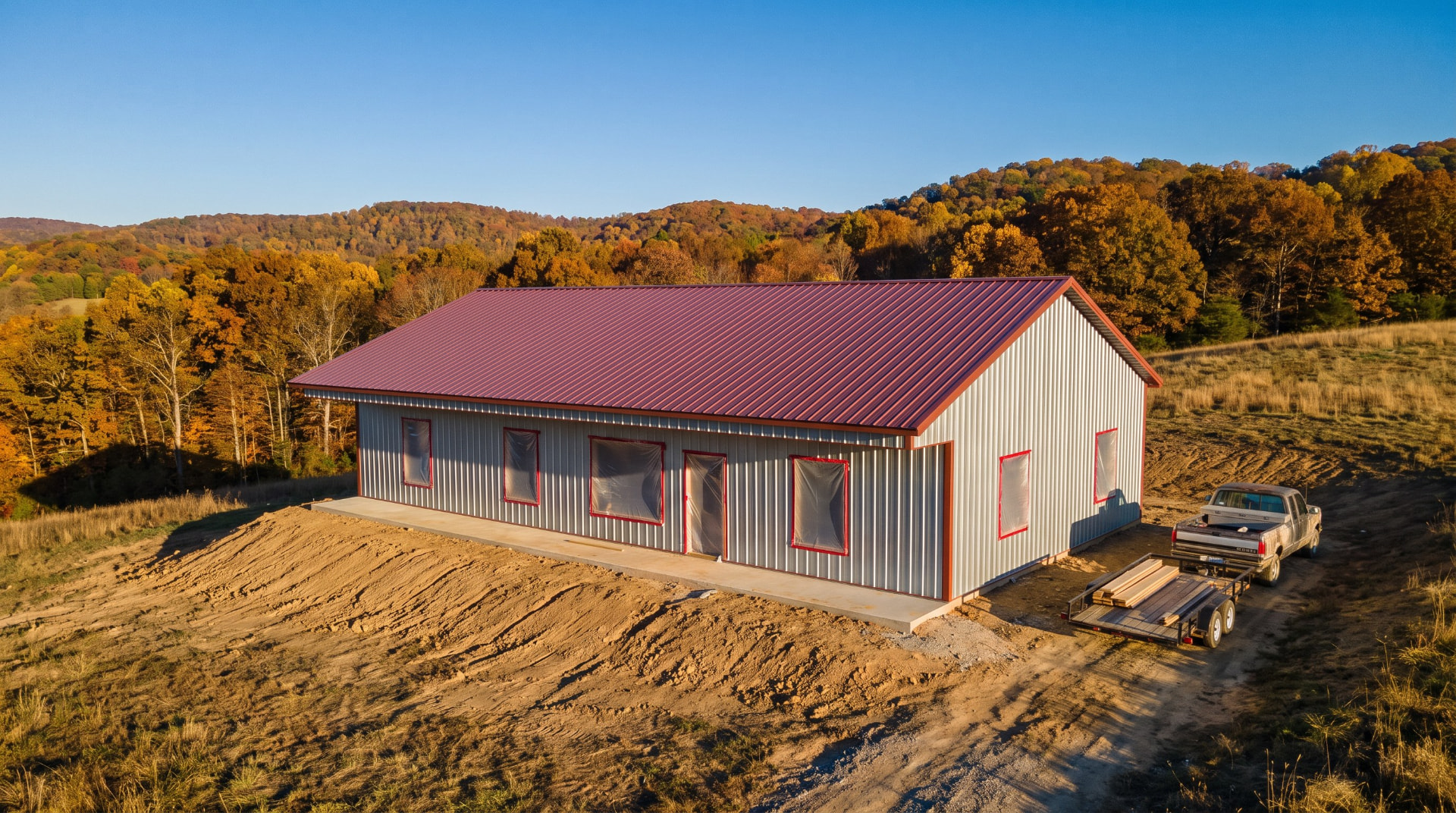
Financing a barndominium is harder than financing a subdivision house, and it is harder for a specific reason: appraisal comparables. Solve that problem and the rest of the process is ordinary.
Why lenders hesitate
An appraiser values your house against recent sales of similar properties nearby. In many markets there are few recent post frame home sales, so the appraiser reaches for whatever is closest, which may be a shop building or a manufactured home. A low appraisal means a smaller loan and a bigger cash requirement from you.
The fix is a lender who has financed these before and an appraiser who has valued these before. Both exist. Local and regional banks in areas where barndominiums are common are the shortest path.
The four common paths
Construction to permanent loan
One closing, one set of fees. You draw against the loan during construction, pay interest only on the drawn balance, and it converts to a mortgage at completion. This is the standard path and the one worth pursuing first.
Two close construction loan
A short term construction loan, then a separate refinance into a mortgage. Two closings, two sets of fees, and interest rate risk between them. Sometimes the only option available.
Farm Credit or agricultural lender
Farm Credit System associations understand rural property, acreage, and outbuildings. They routinely finance post frame homes that a national retail bank will decline. If you have acreage, start here.
Cash, land equity, or owner financing
Free and clear land is the strongest position in this whole conversation. Owned land often counts as your down payment.
What lenders will ask for
- Full construction drawings
- A detailed line item budget with contractor bids attached
- A signed contract with a licensed builder, or an owner builder package
- Proof of land ownership or a purchase contract
- Contractor license, insurance, and references
- Tax returns, pay stubs, and asset statements
Typical terms, as of 2026
- Down payment: 10 to 25 percent, higher for owner builder
- Construction period: 9 to 12 months, extensions cost money
- Rate: construction rate commonly runs above the permanent rate
- Contingency reserve required in budget: usually 5 to 10 percent
These move with the rate environment. Treat them as a starting point for a conversation, not as a quote.
Owner builder financing
Fewer lenders offer it, down payments run higher, and some will hold back your labor value until inspections confirm the work. If you plan to act as your own general contractor, say so in the first call. Discovering it in underwriting kills deals.
Improve your appraisal before it happens
- Give the appraiser your plan set and your finish schedule.
- Provide comparable sales of post frame homes yourself; agents can pull them.
- Describe heated square footage separately from shop square footage, clearly.
- Do not describe the house as a barn, a shop, or an outbuilding on any document.
Practical order
- Talk to three lenders before you buy land, including one Farm Credit association.
- Get a written preapproval with the construction product named.
- Buy the plan set.
- Collect real bids, not estimates.
- Submit the budget with a contingency line already in it.
A lender who says no is not a verdict on the project. It is a verdict on that lender's comparables.
Founding list
Join the founding list.
The catalog opens to the founding list first, at founding pricing, before it goes public.